
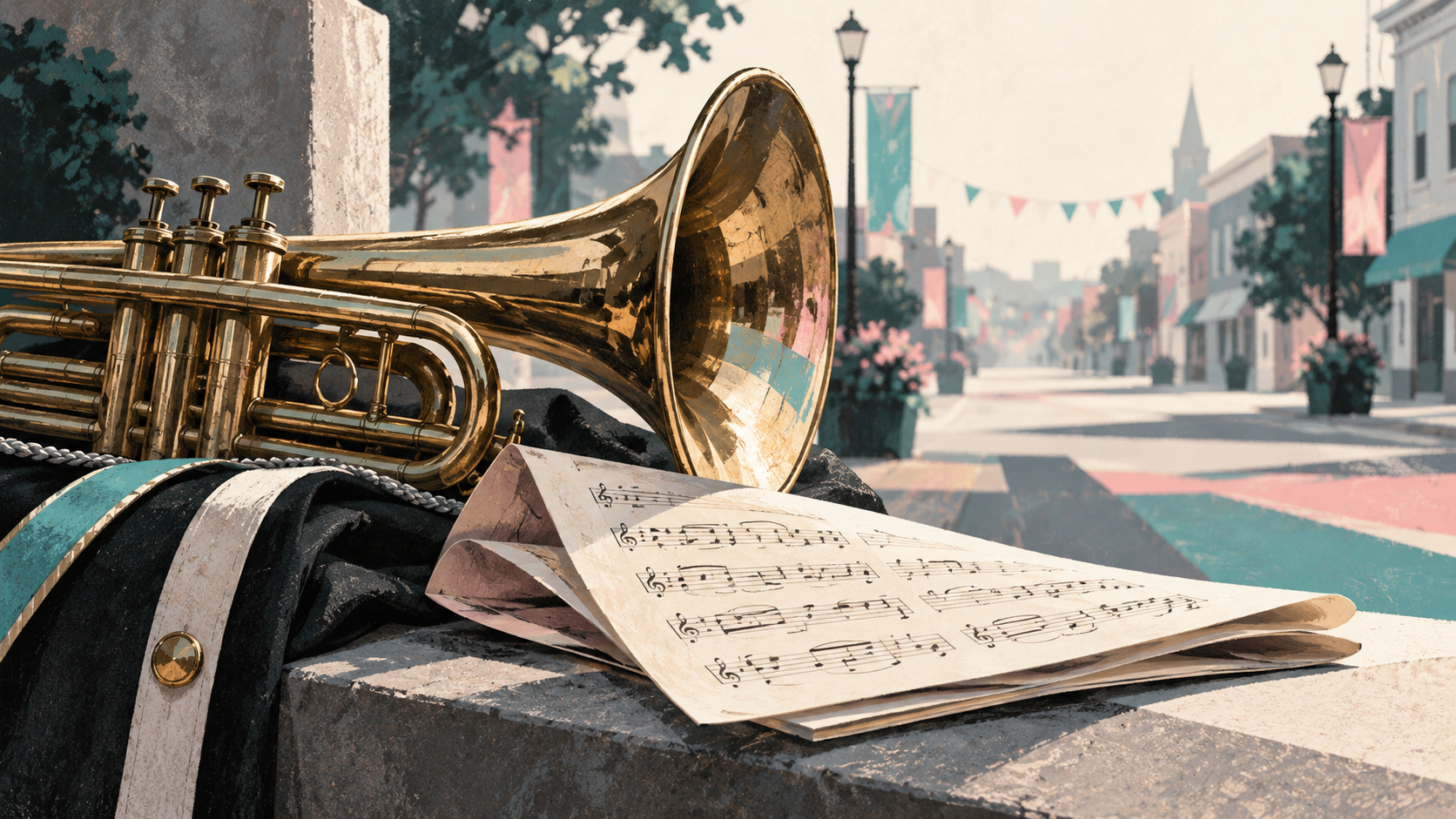
A parade changes the way a familiar downtown is experienced. Streets usually crossed on the way somewhere become places to pause, listen, and watch. For longtime residents, a particular corner may hold years of memories. For someone new to Elmira, the same morning can offer an introduction to the groups and traditions that give a place its character. Neither experience requires an elaborate itinerary; both benefit from a little preparation.
Elmira Downtown Development has announced the 70th Annual Downtown Elmira Holiday Parade for Friday, November 27, 2026. The organizer’s homepage lists a 10:00 a.m. start. As of November 1, the event is upcoming. This feature is a community guide, not a report from the parade or a claim that Holy Smokes sponsors, participates in, or has any affiliation with it.
What the anniversary invites us to notice
The organizer is collecting photographs and stories from earlier parades as part of the anniversary. That gives the milestone a dimension beyond a number on a banner. A public tradition is also an accumulation of private memories: where someone stood, who accompanied them, and which small detail stayed with them after the procession passed. The official parade page explains how people can contribute those memories.
You do not need to present a polished historical account to have something useful to remember. If you have an old photograph, begin with what you know and separate it from what you only suspect. Record names with permission, approximate dates honestly, and any detail that helps identify the location. A clearly labeled uncertainty is more useful to a community archive than a confident but invented caption.
Use the organizer’s information for the actual route
A downtown location is not a substitute for a confirmed parade route. Check the current organizer page and its map before choosing a viewing point. Do not assume that a route from an earlier year, a saved screenshot, or a friend’s recollection is still correct. Likewise, the organizer’s office address should not be mistaken for the parade’s starting point. These details serve different purposes.
When you make your plan, distinguish the event’s start time from the time the procession might reach your chosen location. A 10:00 a.m. start does not mean every part of the route becomes active at exactly that moment. Avoid promising companions a precise passing time unless the organizer provides one. A flexible meeting window will usually make the morning easier than a tightly packed schedule.
Agree on a meeting place before leaving
“See you downtown” is friendly but not very practical when people arrive from different directions. Choose a specific, recognizable meeting point that does not obstruct an entrance or crossing. Share it in plain language, not only as a map pin. A street name and an agreed landmark can help if someone’s phone connection is slow or their battery is low.
Decide what happens if the group becomes separated or someone arrives late. One person can remain at the meeting point for an agreed period while others find a place to watch. Keep the plan simple enough to remember. If you are attending with someone who prefers a shorter outing, make it easy for them to leave independently rather than treating everyone’s departure as a group decision.
Plan for the time spent standing still
An outdoor event can involve more waiting than walking. Choose clothing and footwear for the conditions you expect to encounter, then check a current forecast close to the date. This is a planning suggestion, not a weather prediction for November 27. Keep your hands available and carry only what you can manage comfortably while moving through a public space.
Think about the entire outing: travel, waiting, watching, and returning home. If someone needs seating, step-free access, or a nearby place to take a break, ask the organizer about available arrangements rather than assuming they exist. A realistic plan may mean watching for a shorter period. Enjoyment should not depend on staying longer than your comfort or circumstances allow.
Be a considerate part of the audience
A good viewing spot also leaves room for other people. Keep entrances, curb access, and crossings clear, and follow the directions of event staff. If you bring a chair or another item, consider the space it occupies when people need to pass. Public space works best when each person’s convenience is balanced with the movement of everyone around them.
Photography deserves the same consideration. A quick picture may preserve a memory; holding a device above other people’s heads for an extended time can take away their view. Ask before making identifiable strangers the focus of a close-up. An image of a decoration, an instrument, or the general streetscape can tell the story without assuming everyone nearby wants to appear on a public feed.
Listen for the craft as well as the spectacle
Parades reward different kinds of attention. You might notice the coordination of a group, the construction of a display, or the way sound moves through an open street. Looking for those details can make the experience richer than waiting only for a single favorite element. It also offers a way to appreciate effort without inventing a backstory about how something was made.
If a particular group interests you, note its name and look for its own public information later. Avoid guessing identities or affiliations from colors, uniforms, or a partial sign. A parade can become a starting point for learning more about local organizations, but that curiosity is best served by accurate names and direct sources. Let the people involved describe their own work.
Keep the rest of the day flexible
The parade falls on the day after Thanksgiving. Some people may have visitors, work commitments, or a long trip ahead. Build your plan around those realities instead of treating the event as the first item in an all-day checklist. A simple outing with room afterward can be more satisfying than rushing from one arrangement to the next.
If you intend to meet elsewhere afterward, confirm that location’s actual hours and any reservation requirements. A holiday weekend can affect ordinary schedules. Do not assume a business is open because its usual Friday hours appear online. Make the return journey part of the conversation before the morning begins, especially if several people are relying on one driver or shared transportation.
Record a memory without turning it into a performance
Afterward, write down one thing that surprised you and one detail you want to remember. A short personal record can be more durable than a large collection of nearly identical photographs. If you share a recap, identify it as your own experience rather than a description of what everyone felt. A public event contains many different experiences at once.
For a seventieth anniversary, that variety is part of the interest. The tradition can mean continuity to one person and discovery to another. Keeping both perspectives in view allows the event to remain a living part of Elmira rather than a fixed picture of the past. Check the organizer’s updates before November 27, make a practical plan, and leave room to notice what the morning actually offers.
Editorial note: Information checked November 1, 2026. Featured artwork is an original AI-generated conceptual illustration, not a photograph of a local event or venue.